THE JULIA SHANTAL WAY

Change the pattern. Change the result.

Have you ever noticed that you can walk into a shop full of clothes and somehow walk out with the same kind of clothes you already have?


The same colours. The same cut. The same style. Even when you tell yourself: “This time I’m going to try something different.” You see something unfamiliar and think: “Hmm… not sure.

Then you see something that feels like you. And you buy it. Not necessarily because it’s the best thing for you. Because it feels familiar.

You already know how to wear it. You already know how to be that version of yourself. And we do this with much more than clothes. We do it with the jobs we choose. The people we date. The relationships we stay in. The way we communicate. The way we show up. The things we tolerate. The opportunities we say yes to.


Sometimes we choose what feels familiar before we choose what is actually better for us. And that’s where things get interesting.


Because you can genuinely want a different life…

while continuing to make familiar choices.

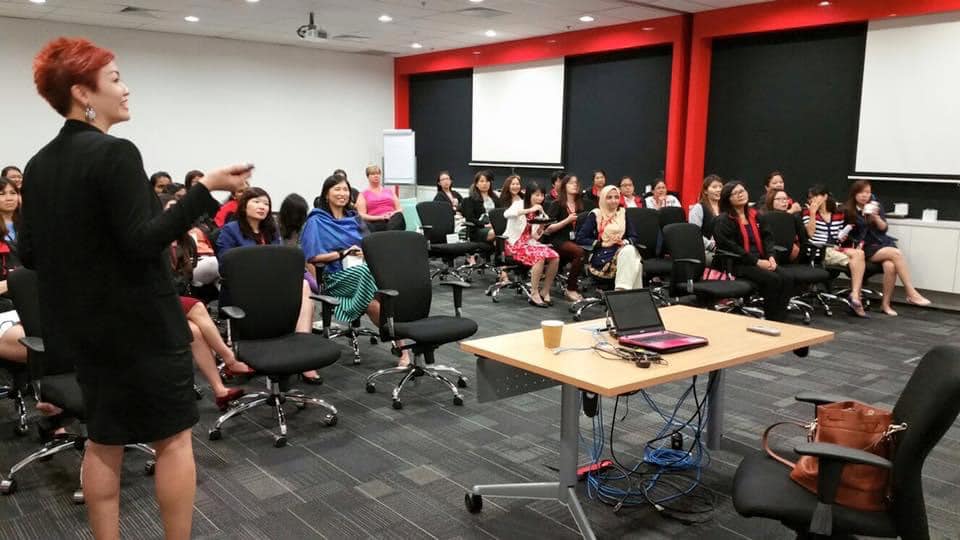
For more than 17 years, I’ve been in rooms like this, teaching women how to sell, communicate, present themselves and grow.

Have you ever wondered why you keep ending up in the same place?

Maybe the men are different, but the relationship somehow feels the same.

Maybe you’ve changed jobs, but you’re still doing everything yourself and wondering why nobody sees how capable you are.

Maybe you’ve started a new business, but you’re still overdelivering, undercharging and struggling to explain what makes you different.

Maybe you’ve worked on your confidence, but you still second-guess yourself when it matters.

Maybe you’ve changed the circumstances several times, but somehow you’re back in a familiar situation.

At some point, the question becomes:

Is it really just the circumstances?

Or is there something about the way you’re choosing, behaving or responding that keeps creating a familiar result?

That’s where pattern recognition begins.


Why do I keep attracting the same kind of relationship?

This is one of the questions women ask me most often.

They change the man.

But the dynamic feels familiar.

They give too much.

They wait too long.

They explain away what doesn’t feel right.

They fall in love with potential.

They stay because they believe that if they’re patient enough, understanding enough or loving enough, something will eventually change.

And sometimes they ask:

“Why do I keep attracting emotionally unavailable men?”

But there’s another question worth asking:

“What happens after you recognise that someone is unavailable?”

Do you leave?

Or do you stay and try harder?

Do you accept what is actually being offered?

Or do you keep investing in what you hope it will become?

Because the pattern isn’t only about who you choose.

It can also be about what you continue doing after you already have enough information to choose differently.


Why do I keep giving more than I receive?

Sometimes overgiving doesn’t feel like overgiving.

It feels like being loving.

Being helpful.

Being understanding.

Being the strong one.

Being the person everyone can depend on.

Until one day you’re exhausted and wondering:

“Why am I always the one carrying everything?”

And there may be a deeper question underneath that:

“What did I learn about love that made carrying everything feel necessary?”

Maybe you learned that being useful made you valuable.

Maybe you learned that being easy to love meant having fewer needs.

Maybe you learned that keeping everyone happy kept you safe.

Maybe you learned that if you gave enough, people wouldn’t leave.

These patterns don’t disappear just because someone tells you to set better boundaries.

You have to understand why the old behaviour became so familiar in the first place.


Why do I know my worth but still accept less?

You can know your worth intellectually and still make decisions that don’t reflect it.

You can say:

“I deserve better.”

And still reply to someone who repeatedly gives you crumbs.

You can say:

“I want respect.”

And still keep making yourself available to people who don’t respect your time.

You can say:

“I’m worth more.”

And still undercharge because you’re afraid someone will say no.

So the question becomes:

Have your decisions caught up with what you say you believe about yourself?

Because self-worth isn’t only something you think.

It shows up in your standards.

Your boundaries.

Your choices.

What you tolerate.

And what you are willing to walk away from.


Why do I keep choosing potential over reality?

Maybe you’ve watched enough romantic films and K-dramas to believe that the difficult man eventually realises she’s the one.

The grand gesture.

The breakthrough.

The moment he finally sees her.

There’s nothing wrong with enjoying those stories.

But real life doesn’t always follow the script.

A man pulls away.

You tell yourself he’s scared.

He comes back.

You tell yourself, See? He does care.

He becomes inconsistent again.

You tell yourself he just needs time.

And slowly, you’re no longer responding to the relationship you actually have.

You’re responding to the relationship you hope it will become.

Sometimes what feels like chemistry is simply familiarity.

And sometimes what you’re calling hope is keeping you attached to potential instead of reality.


Why do I keep repeating it when I’m already aware of it?

This is one of the most important questions.

Because you may already know your pattern.

You know you overgive.

You know you chase.

You know you shouldn’t settle.

You know you need boundaries.

You know you need to be more visible.

You know you need to charge more.

You know you need to stop doing everything yourself.

So why do you keep doing it?

Because knowing something intellectually doesn’t automatically change the behaviour you’ve practised for years.

Sometimes the behaviour is tied to something much older.

What you learned about love.

What you learned about being good.

What you learned about being needed.

What you learned about safety.

What you learned about success.

What you learned about what you had to do to be valued.

That is why simply knowing better doesn’t always mean you can do better.

The pattern can run deeper than the advice you’ve been given.


What are you calling a strength that may actually be costing you?

This is where patterns become especially difficult to see.

Because they don’t always look like problems.

They can look like your best qualities.

You call it:

Being patient.

But maybe you’re waiting for something that has already shown you what it is.

Being loyal.

But maybe you’re staying where you’re no longer being chosen.

Being independent.

But maybe you’ve become so used to doing everything yourself that you don’t know how to receive.

Being humble.

But maybe you’re hiding because being seen feels uncomfortable.

Being capable.

But maybe you’ve become the person who does everything because nobody else can do it as well.

Being understanding.

But maybe you’re constantly explaining away behaviour that hurts you.

Sometimes the question isn’t:

“What’s wrong with me?”

It’s:

“What am I calling a strength that may actually be keeping me stuck?”


What is your behaviour communicating?

You can say you want commitment.

But if you keep accepting ambiguity, your behaviour is communicating something too.

You can say you want respect.

But if you keep making yourself endlessly available, people are receiving a different message.

You can say you want to be visible.

But if you keep waiting until you’re completely ready, your behaviour is communicating hesitation.

You can say you want premium opportunities.

But if you keep apologising for your price, overexplaining your value and doing more than you were paid for, that communicates something too.

Your behaviour is always saying something.

The question is:

Is it saying what you think it is?


What if the problem isn’t that you don’t know enough?

Maybe you’ve already read the books.

Saved the posts.

Watched the videos.

Talked to your friends.

Promised yourself you won’t do it again.

Maybe you even understand exactly what you’re doing.

And then something happens.

You meet someone.

You get the opportunity.

You feel rejected.

You feel uncertain.

You feel afraid.

And suddenly the old behaviour comes back.

That’s the part I care about.

Not just what you know.

But what happens when you’re actually inside the situation.

Because that’s where patterns become powerful.

And that’s also where they become much harder to change on your own.


This is why my work is about recalibration

I don’t believe you need to become somebody else.

I don’t believe you need another personality makeover.

And I don’t believe every problem requires you to throw your life away and start again.

Sometimes something in the way you’re operating needs to be recalibrated.

The way you choose.

The way you communicate.

The way you respond to uncertainty.

The way you allow people access to you.

The way you present yourself.

The way you make yourself visible.

The way you price your work.

The way you interpret other people’s behaviour.

The way you keep trying to earn something that should not have to be earned.

The standard you say you have versus the standard you actually enforce.

That is the level where change begins.


And this isn’t just about relationships

Relationships are simply one place where patterns become very obvious.

The woman who overfunctions in love may overfunction at work.

The woman who waits to be chosen may wait for her boss to recognise her.

The woman who constantly proves her value may overdeliver in business.

The woman who hides what she knows may remain invisible despite years of experience.

The woman who believes she has to earn everything may struggle to receive money, support or opportunity.

The woman who keeps starting over may not need another beginning.

She may need to understand why she keeps operating from the same place.

That’s why this work extends across:

Love.

Self-worth.

Confidence.

Career.

Money.

Leadership.

Visibility.

Business.

Personal presentation.

Reinvention.

Different room.

Different circumstances.

Sometimes the same pattern underneath.


What if you don’t need to start over?

This is something I’ve had to learn myself.

When my own income streams changed, I could have decided that everything I’d built was no longer useful.

Instead, I asked:

“What do I already have?”

Seventeen years of experience.

Beauty.

Sales.

Leadership.

Training.

Content.

Understanding people.

And eventually, AI became another way to use all of that experience.

I didn’t become a technologist.

I learned to see what I already knew differently.

Sometimes your next chapter isn’t about throwing away everything you’ve built.

Sometimes it’s about recognising what you’ve already accumulated and learning how to use it in a different environment.


What do you actually want to change in your life?

Maybe you came here because you want a better relationship?

Maybe you want to stop repeating the same dating pattern.

Maybe you want to feel more confident.

Maybe you want to be seen for what you’re actually capable of.

Maybe you want to earn more from what you already know.

Maybe you want to change your career.

Maybe you’re ready for a completely different chapter.

Or maybe you’re simply exhausted because you’ve changed so many things and somehow still feel like you’re back at square one.

Different man.

Different job.

Different business.

Different strategy.

Same feeling.

That’s when I want you to stop and ask:

“What am I repeating?”

Because sometimes the next step isn’t another change on the outside.

It’s understanding what needs to change on the inside.

I’ve seen what happens when that changes

I’ve spent more than 17 years working with women.

I’ve helped women change the way they present themselves, communicate, lead, set boundaries, show up, sell, build confidence and make decisions.

And I’ve watched those changes affect much more than the original problem.

I’ve seen women become more visible at work.

Women change the way they carried themselves and suddenly be treated differently.

Women who had spent years overgiving begin setting boundaries.

Women who had lost themselves in relationships begin choosing themselves again.

Women rebuild their confidence after painful life transitions.

Women take what they already know and begin seeing possibilities they couldn’t see before.

I’ve experienced it in my own life too.

My own relationships changed.

My career changed.

My income changed.

My identity changed.

I’ve had to rebuild more than once.

And each time, I’ve had to ask myself:

“What do I already have? What am I doing? What needs to change?”

That’s why I don’t teach from a textbook.

I’ve had to live this.

And I’ve watched my clients live it too.

What if you’re tired of starting from square one?

Maybe that’s the real frustration.

You’ve already read the books.

You’ve already watched the videos.

You’ve already told yourself you won’t do it again.

You already know the advice.

And yet somehow, when life happens, you find yourself doing the same thing.

That’s when more information isn’t necessarily what you need.

You need to see your own pattern clearly enough to do something different.

And sometimes that is much harder to do when you’re inside it.

That’s why I created this body of work.

The books help you go deeper into specific patterns.

My work helps you see the bigger picture.

And RESET gives you the opportunity to look at your pattern, not someone else’s, with me.

Where do you want your life to be different?

Your love life?

Maybe you’re tired of choosing men who cannot give you what you actually want.

Your confidence?

Maybe you’re tired of knowing you’re capable but still second-guessing yourself.

Your career?

Maybe you’re ready to stop waiting to be recognised and start becoming visible for what you know.

Your money?

Maybe you’ve spent years working hard and you’re ready to learn how to turn your experience into something more valuable.

Your next chapter?

Maybe you’re not looking for another beginning.

Maybe you’re looking for a way to make sense of everything you’ve already built.

Whatever room you’re standing in, start there.

Because the question isn’t simply:

“How do I get a better result?”

It’s:

“What needs to change in me for a different result to become possible?”

Then your books can come in naturally:

Start with the problem you want to change.

I keep choosing men who pull away.
Stop Dating Avoidants and Start Healing

I keep attracting emotionally unavailable people.
Why Do I Keep Attracting Emotionally Unavailable People?

I keep losing myself in relationships.
The End of Self-Abandonment

I confuse generosity with commitment.
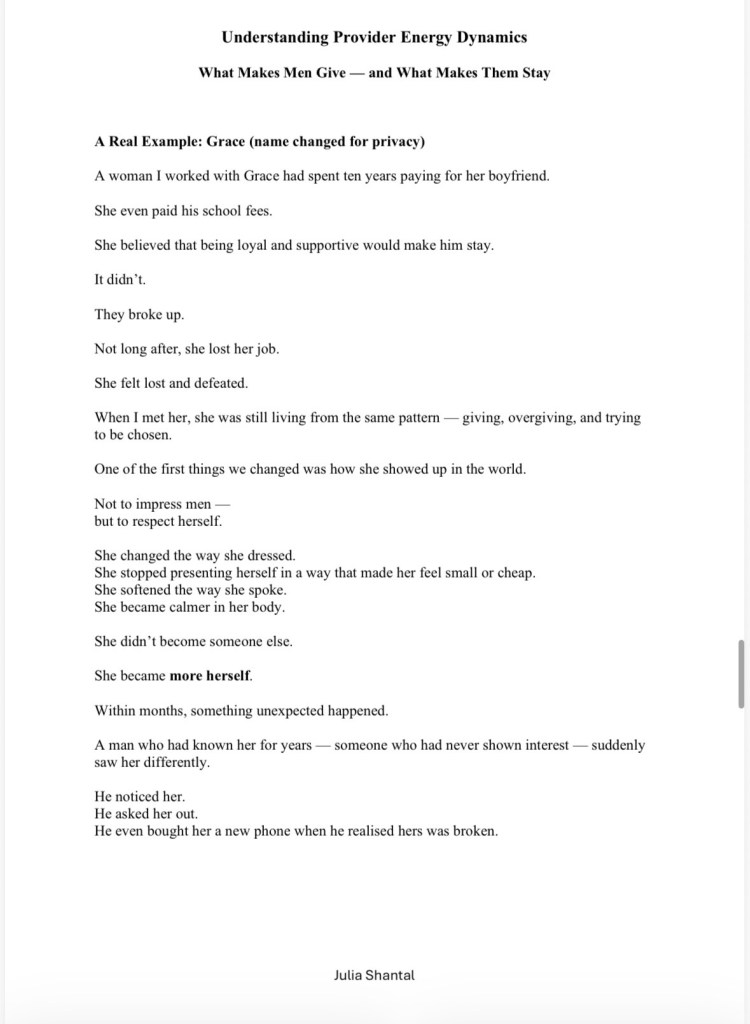
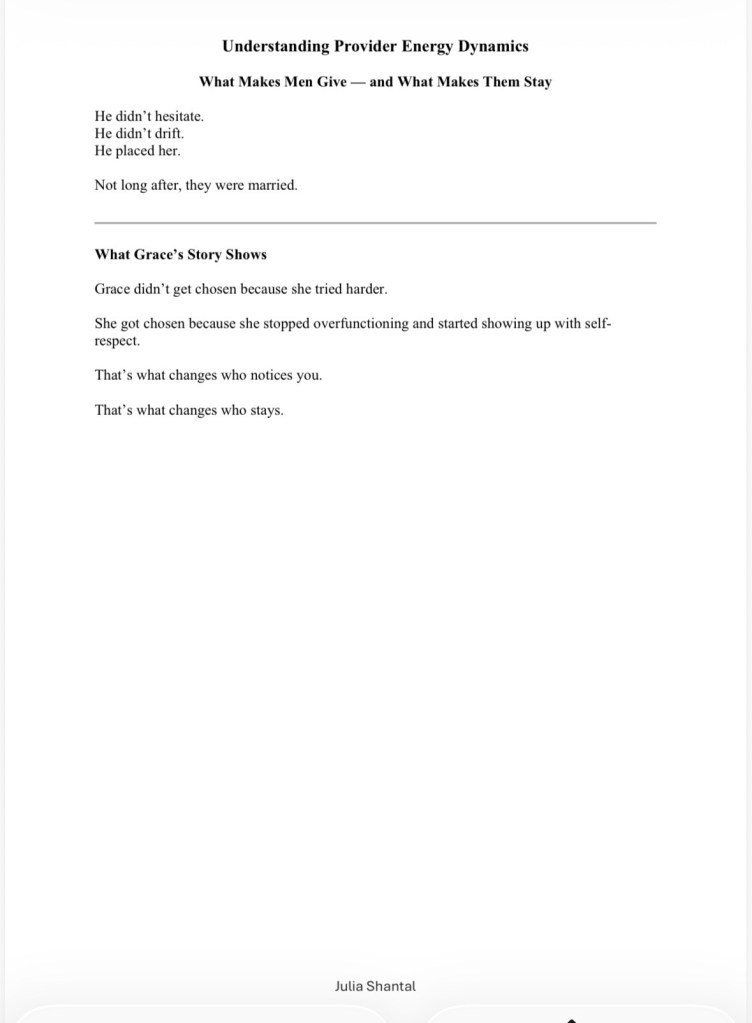
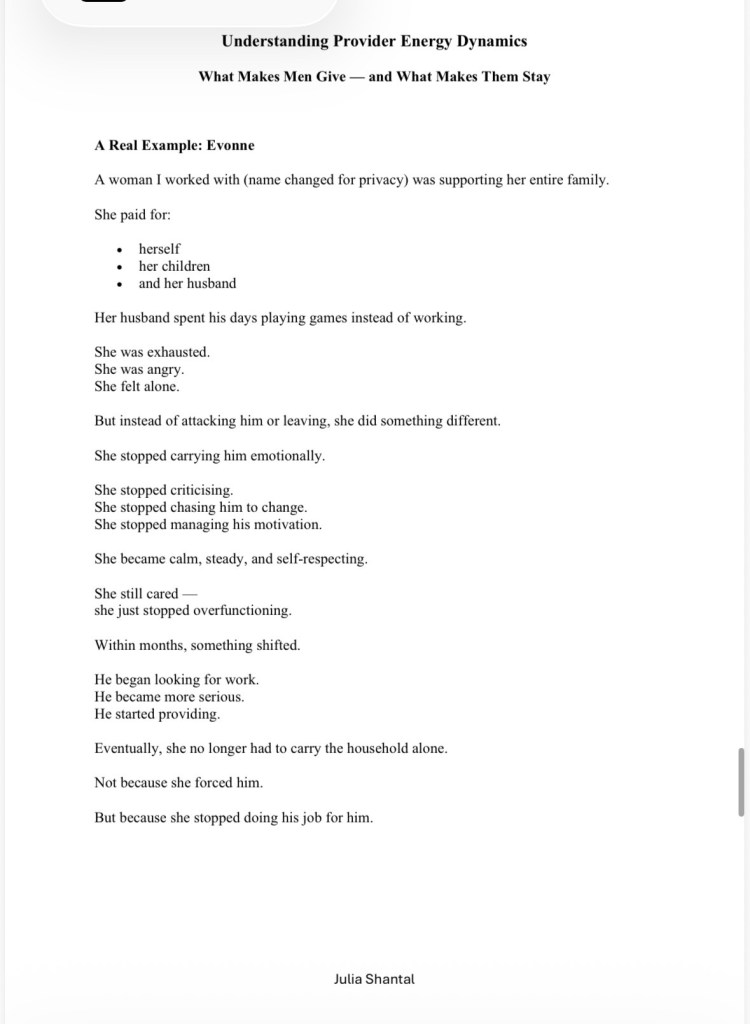
Understanding Provider Energy Dynamics

I know my worth, but my decisions don’t reflect it.
You Are The Prize

I have years of expertise, but I don’t know how to turn it into visibility and income.
Turn Your Expertise Into Income With AI

And then:

Still can’t see what’s happening in your own life?

That’s where RESET comes in.

Sometimes you can see everyone else’s pattern.

You just can’t see your own.

RESET is a focused 1:1 conversation where we look at what’s happening, what’s keeping it in place, and what may need to change.

RESET is a private 1:1 conversation with me, available worldwide via Zoom.

I’ve seen what one honest conversation can unlock for women.

Give it a go. It might change the direction of your life.

Explore RESET